All Courses
Developing cognitive case conceptualizations and challenging core beliefs
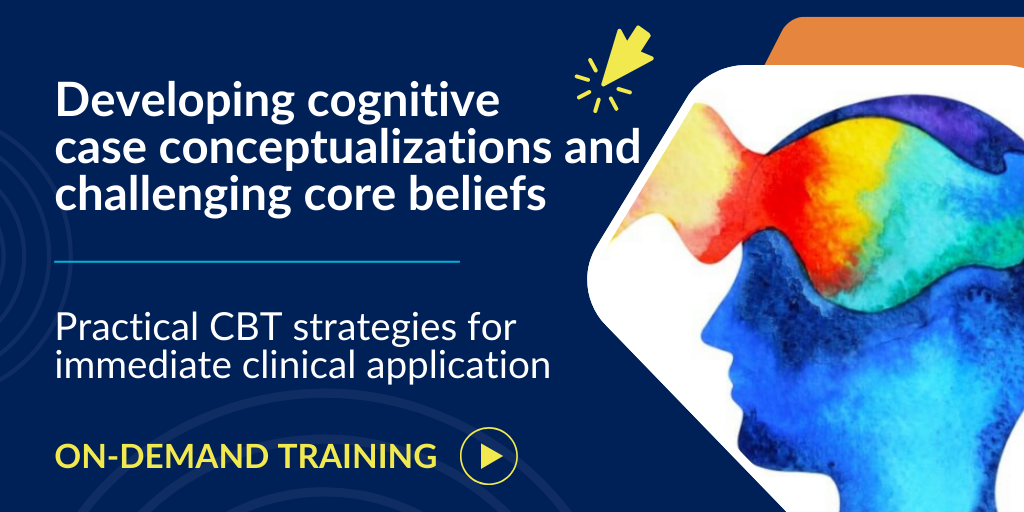
Build deeper insight and clinical precision by mastering cognitive case conceptualizations in cognitive behaviour therapy (CBT) —an essential skill for effective, belief-focused therapy.
This training is suitable for:
- Mental Health Professional: psychotherapists, counsellors, psychologists, social workers.
- Medical Professionals: nurses, psychiatrists, pediatricians, family doctors.
- Direct Service Workers: drop-in workers, shelter and hostel workers, child and youth workers, youth justice workers
Client category: For professionals who work with adult populations.
Level of training: Introductory/Intermediate
CE hours: 6
Overview:
Explore cognitive case conceptualizations in CBT for working with adult populations.
Developing a cognitive case conceptualization is one of the fundamental aspects of treating clients using a CBT approach. This conceptualization is critical for creating a treatment plan. As well as understanding the relationship between early childhood events, core and intermediate beliefs, and automatic thoughts.
In this training, Dr. Lazar will discuss how to conceptualize client cases using a CBT approach. He will explore strategies to identify and modify intermediate and core beliefs..
Learning objectives:
- Understand the relationship between early childhood events, core and intermediate beliefs, and automatic thoughts
- Develop cognitive conceptualization diagrams
- Identify intermediate and core beliefs
- Develop strategies to challenge intermediate and core beliefs
Register now and enhance your CBT practice with practical tools to conceptualize cases and challenge the beliefs that drive client distress. Gain confidence in building structured treatment plans that address the patterns maintaining client difficulties.
Upon registration, participants will receive a confirmation email. Access details for SickKids Academy Online will be sent once the on-demand version becomes available (anticipated mid-April 2026). Participants will have access for 90 days from the date they begin the course on SickKids Academy Online. Following the training, participants must complete a quiz to receive their Certificate of Participation.
Updated August 28, 2026.
On-demand webinar
On-demand | Participants will have access for 90 days
Noah Lazar, PhD, C.Psych.